
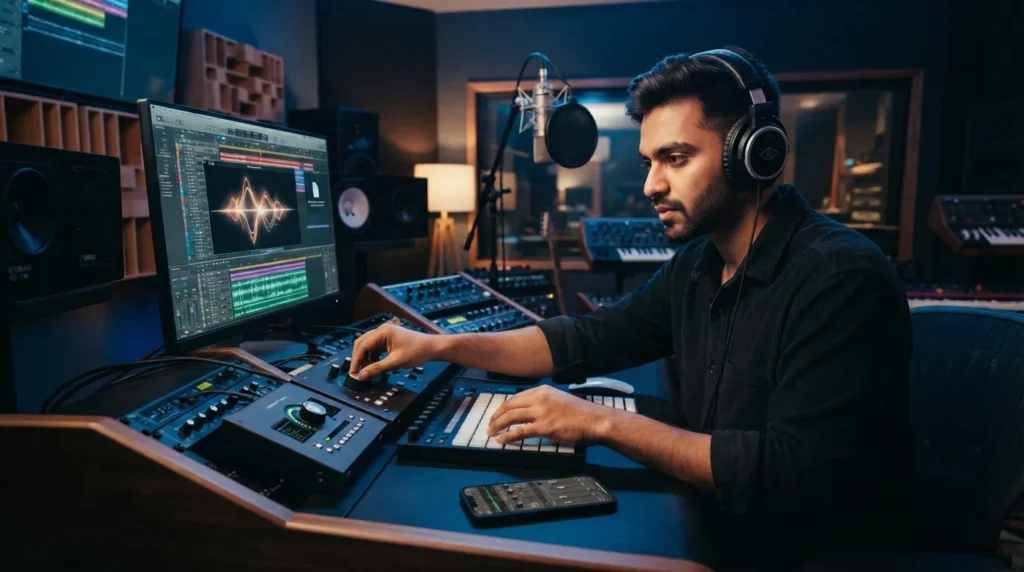
The Indian music industry is facing a growing challenge around copyright protection and music licensing in the digital environment.
A recent report from ContentLens, an AI-powered intellectual-property protection platform, estimated that India’s music industry could be losing more than ₹350 crore annually in sync revenue because copyrighted music is being used commercially on platforms such as Instagram and YouTube without appropriate licensing.
What Is Music Licensing?
Music licensing gives individuals, businesses, platforms or other users permission to use copyrighted music under specific terms.
For example, a commercial video, advertisement, branded social-media campaign or other professional production may require permission to use a particular song.
The exact licensing requirements can vary depending on how the music is being used, who owns the rights and what type of content is being created.
Why Social Media Has Changed the Music Business
Platforms such as Instagram and YouTube have transformed how people discover and use music.
A song can quickly become popular through:
- Short videos
- Reels
- YouTube videos
- Brand campaigns
- Promotional content
- Creator collaborations
This creates new opportunities for musicians and rights holders, but it also creates challenges when copyrighted music is used without the necessary permissions.
The Revenue Problem
According to the recent ContentLens report cited by the Economic Times, the estimated annual loss of more than ₹350 crore relates specifically to sync revenue.
Sync licensing generally involves the use of music alongside visual content, such as films, advertisements, online videos and other audiovisual productions.
The issue highlights how digital content creation has expanded faster than traditional approaches to rights management.
Why Copyright Awareness Matters for Creators
Independent creators, musicians, video producers and businesses should understand that finding a song online does not automatically mean that it is free to use commercially.
Before using copyrighted music in professional content, creators should understand:
- Who owns the recording
- Who owns the composition
- Whether a licence is required
- What type of use is permitted
- Whether the licence covers commercial content
- Whether platform-specific rules apply
Following the correct licensing process can help protect both creators and rights holders.
What This Means for Indian Musicians
For musicians and music companies, digital platforms can provide enormous exposure.
At the same time, protecting intellectual property is becoming increasingly important as more music is incorporated into online videos, advertisements and social-media content.
Better rights management can help ensure that composers, lyricists, performers, labels and other rights holders receive appropriate value when their work is commercially used.
Final Thoughts
The growth of digital content has created a new relationship between music and online video. As Instagram, YouTube and other platforms continue to influence music discovery, copyright and licensing are becoming increasingly important parts of the Indian music business.
For emerging artists and creators, understanding music rights is no longer only a legal issue—it is also an important part of building a sustainable career in the digital music industry.